The Last Seven Days Brought In 66% of the Raffle
Thirteen days into a twenty-two day campaign, The Cure Starts Now Australia’s raffle had taken $300 since the opening weekend. Anyone watching the dashboard would have called it a failure.
Then the closing week brought in $6,050.
The raffle
The Cure Starts Now Australia is an Australia-wide charity, headquartered in Townsville and running on largely volunteer effort, that funds research into paediatric brain cancer. Much of that work targets DIPG — a childhood brain cancer that remains untreatable and, for the roughly twenty Australian children diagnosed each year, is almost always fatal within a year of diagnosis.
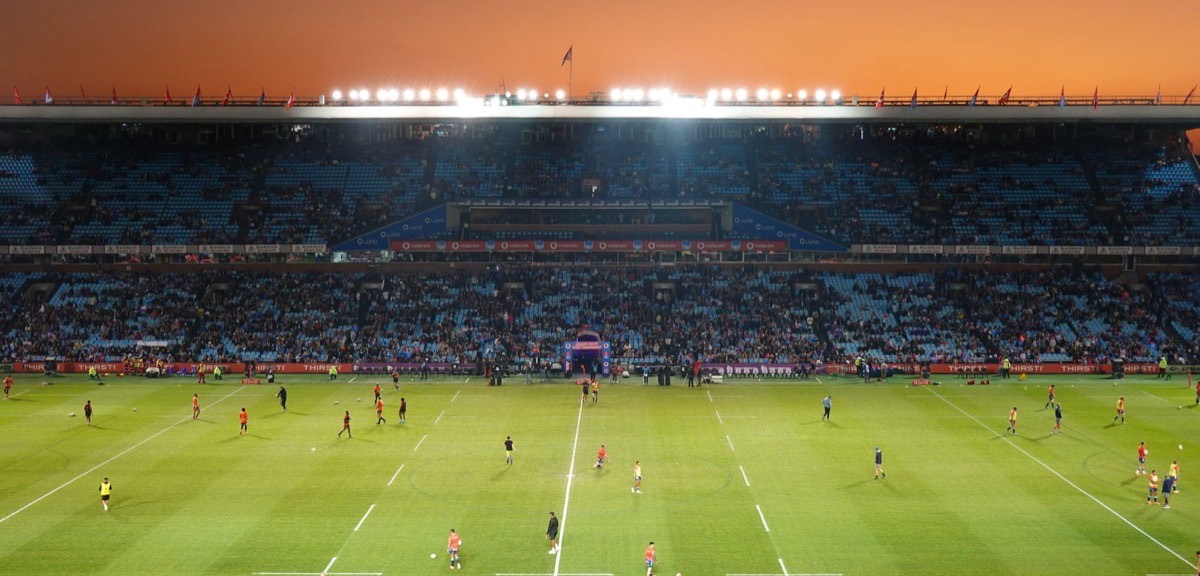
To raise money for that research, the raffle offered a single prize: a Platinum Corporate Box for four at Queensland Country Bank Stadium for Cowboys versus Broncos, with corporate parking and full hospitality from arrival through to the final siren.
The raffle ran from 30 June to 22 July at $50 a ticket, capped at 250 tickets, and was drawn on 23 July. It sold 183 tickets to 124 supporters, raising $9,150 in ticket sales — with supporters chipping in a further $292 towards fees on top.
One good prize beat a long list
The prize was advertised at just over $2,500. The raffle raised more than three and a half times that.
There is a habit in fundraising of assembling as many prizes as possible: a first prize, then a hamper, then a voucher ladder down to twentieth place. It is not wrong, but it has a cost. Every prize has to be sourced, described, photographed, drawn and delivered, and the pitch becomes a list rather than a sentence.
One prize that people genuinely want does something a ladder cannot: it makes the raffle explicable in a single line. “Win a corporate box for the Cowboys–Broncos game” needs no further explanation, and it sold 183 tickets at a flat $50 with no multi-buy discounts at all.
The deadline does the work
The shape of this campaign is not unusual. It is just unusually stark:
- Launch, 1–3 July — $2,800, about 31% of the total
- The middle, 4–16 July — $300 across thirteen days, barely 3%
- The close, 17–23 July — $6,050, 66%
Two-thirds of everything raised arrived in the last seven days — and that is close to typical. Across RaffleLink raffles that run for a month or less, the closing week brings in around two-thirds of the total. On campaigns that run longer than a month, it is closer to a third.
Short campaigns concentrate the effect. A twenty-two day raffle keeps the deadline permanently in view. Stretch the same raffle across two months and the quiet middle simply gets longer — the ending does not get bigger to compensate.
The practical lesson runs both ways. Do not panic during the quiet stretch; it is normal, and it is not a verdict on your raffle. But do not rely on it to come good on its own either. Plan your strongest push for the closing week, because that is when people actually act.
Supporters will often cover the fee
With fee assistance switched on, buyers can choose to absorb the platform fee themselves so that more of their ticket price reaches the cause.
77 of 125 orders — 62% — did exactly that, adding $292 to the charity’s total.
That is a little above the platform-wide average, which runs at about half of all orders. It is worth knowing how normal this is, because organisers often hesitate to switch the option on at all: the fear is that asking buyers to cover a fee will cost you sales. In practice most buyers take it up, particularly where the buyer is really a donor and the ticket is the donation.
The prize suited the audience
A charity headquartered in Townsville raffling a box at the Cowboys’ home ground is not a coincidence. The prize was pitched at the supporters most likely to want it.
It is a useful test when you are sourcing a prize. Not “is this valuable?” but “do the people already inclined to support us actually want this?” A prize with broad appeal and no particular connection to your supporters will usually sell fewer tickets than a smaller one aimed squarely at them.
The takeaway
A single prize, a short window and a clear deadline raised more than $9,000 for paediatric brain cancer research from 124 people.
If your raffle has gone quiet in the middle, that is not the story. What you do in the final week is.
The Cure Starts Now Australia ran this raffle on RaffleLink.